By CryptoCaster Editorial Desk | December 8, 2025
A rare moment from Bitcoin’s earliest chapter surfaced this week:
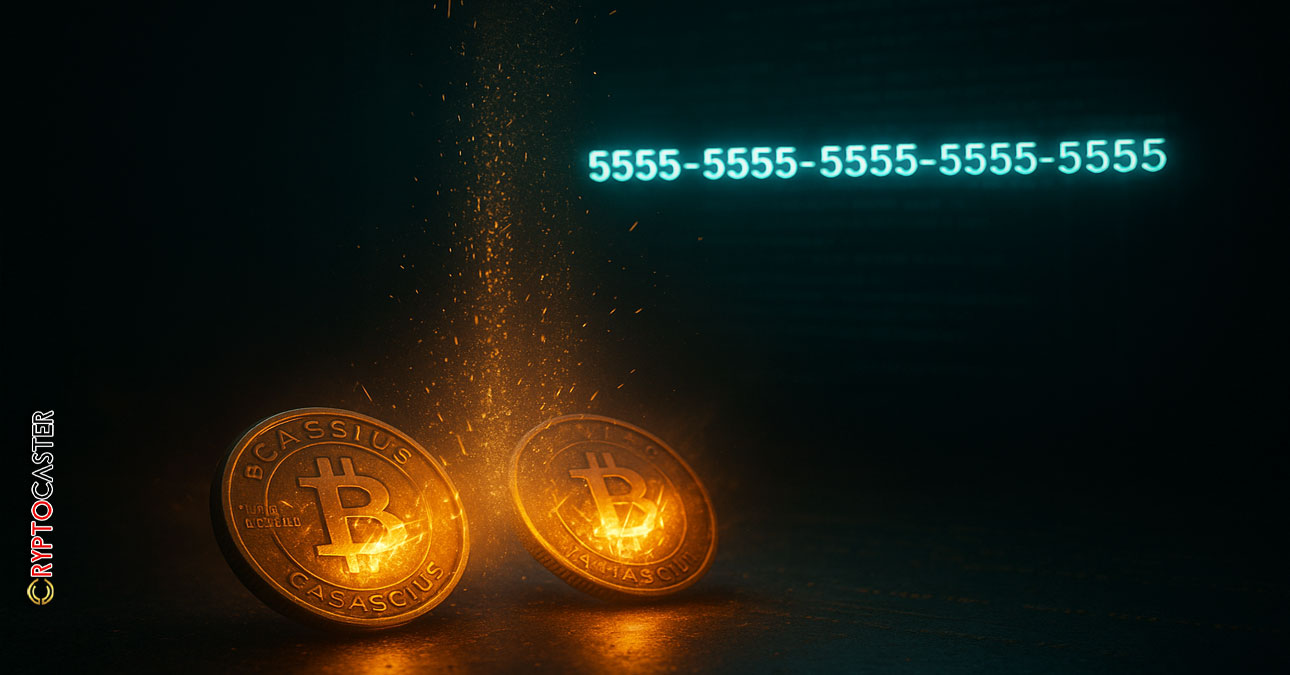
Two Casascius coins holding a combined 2,000 BTC moved for the first time in more than 13 years, according to on-chain data.
These physical Bitcoin tokens — once redeemable only by peeling a hologram to reveal a private key — represent some of the most iconic artifacts from the pre-institutional crypto era.
Stay in the know on crypto by frequently visiting Crypto News Today
Events like this are uncommon.
Movements from Satoshi-era wallets are even rarer.
And when a dormant trove of this size awakens, the entire market takes notice.
CryptoCaster Quick Check:
A Historic Bitcoin Relic Comes Back Online
Casascius coins were minted between 2011 and 2013, during Bitcoin’s earliest and most experimental years. Each coin embedded a real BTC balance inside a hologram-protected private key, turning Bitcoin into a physical bearer instrument long before hardware wallets existed.

The two coins involved in this movement were high-value denominations — each representing 1,000 BTC. Combined, they held more than $140 million at current prices.
Their sudden activation raises immediate questions:
- Who held these coins?
- Why were they dormant for over a decade?
- What prompted the move now?
- Is the activity tied to inheritance, custody changes, or security upgrades?
No direct answers yet — but the timing and scale make the movement extraordinary.

What On-Chain Analysis Reveals
Preliminary blockchain data shows:
- The coins were redeemed via the Casascius validation process, meaning the holograms were likely peeled, exposing their private keys.
- Funds moved to modern wallet structures, suggesting a transfer of control, not necessarily a liquidation.
- There was no immediate movement to exchanges, which reduces the probability of a direct sell event.
- The addresses involved belong to a narrow group of known Casascius-issued outputs, all traceable through Mike Caldwell’s original minting logs.
This points toward a controlled migration rather than an emergency or distressed transfer.
Why Dormant Bitcoin Movements Matter
Movements from old addresses are key indicators of shifting dynamics inside Bitcoin’s earliest cohort of holders. These events often surface in cycles:
- When early adopters upgrade to new custody methods
- When estates settle ownership
- When holders re-engage with the market after long absence
- When wealth consolidates into multisig or institution-grade solutions
But in every case, the underlying theme is the same:
Bitcoin’s deepest liquidity — the original liquidity — is always in motion far beneath the headlines.
The 13-year silence around these coins suggests the custodian understood the gravity of their value and chose a moment of intentional reactivation.
The Significance of Casascius Coins Themselves
Casascius coins occupy a special place in crypto history:
- They were the first widely recognized physical Bitcoin embodiment.
- Their minting ended after U.S. regulators intervened in 2013.
- Only a fraction of all minted coins have ever been redeemed.
- Many remain sealed, making them highly collectible.
A redemption of this magnitude implies:
- The owner no longer values the physical collector premium
— or — - The physical coins changed hands and the new custodian unlocked them
— or — - The funds were retrieved due to legal or estate processes.
Regardless, the awakening of two 1,000-BTC coins is extraordinarily rare.
Market Impact: Symbolic, Not Structural
Despite their size, long-term movements like this rarely create short-term volatility unless they hit centralized exchanges — and these transfers did not.
Instead, the impact is psychological and historical:
- Traders are reminded that early Bitcoin is not idle; it watches and moves.
- Analysts review wallet clustering to track whether this behavior aligns with previous Satoshi-era awakenings.
- Collectors and historians interpret the moment as another page in Bitcoin’s evolving story.
In essence, this is less about market pressure and more about continuity — proof that Bitcoin’s oldest wealth still circulates, adapts, and reorganizes.
What Comes Next
The coming days will likely bring:
- More detailed wallet forensics
- Analysis of subsequent hops or coin consolidation
- Speculation over whether the original holder resurfaced
- Renewed interest in Casascius coin redemption patterns
If the funds eventually move to an exchange, market narratives may shift — but for now, the transfer reflects custody evolution, not liquidation intent.

Bottom Line
Two Satoshi-era Casascius coins awakening after 13 years is more than a whale alert — it’s a reminder of Bitcoin’s living history.
The movement reflects how early holders are modernizing their custody practices while still reinforcing Bitcoin’s long-term narrative: wealth created in the beginning remains active, deliberate, and deeply tied to the asset’s mythos.
If this article brought you clarity, insight, or value—support the work that made it possible.
At CryptoCaster, we report on Web3, crypto markets, and institutional finance with no billionaire owners, no shareholders, and no hidden agenda. While mainstream media bends toward Elon Musk, BlackRock, and JPMorgan narratives, we stay focused on what matters: truth, transparency, and the public interest.
We don’t just cover the headlines—we investigate the power structures behind them. From FTX and Ripple to the quiet push for CBDCs, we bring fearless reporting that isn’t filtered by corporate interests.
CryptoCaster is 100% paywall-free. Always has been. To keep it that way, we depend on readers like you.
If you believe independent crypto journalism matters, please contribute—starting at just $1 in Bitcoin or Ether. Wallet addresses are below.
Your support keeps us free, bold, and accountable to no one but you.
Thank you,
Kristin Steinbeck
Editor, CryptoCaster
Support CryptoCaster: The Unfolding of Money
At CryptoCaster.world, we’re dedicated to bold journalism, sharp insights, and fearless commentary across blockchain, Web3, and crypto markets. Your **Bitcoin contributions** help us stay independent and continue delivering signal over noise.
🚨 CryptoCaster does not offer investment advice. Always DYOR—volatility is real, and risk tolerance matters.
Support our mission. Contribute BTC today.
🔗 Bitcoin Address:
3NM7AAdxxaJ7jUhZ2nyfgcheWkrquvCzRm
Thank you for backing our journalistic lens as we chronicle the Unfolding of Money — a saga still being written in real time.
CRYPTOCASTER HEATMAP